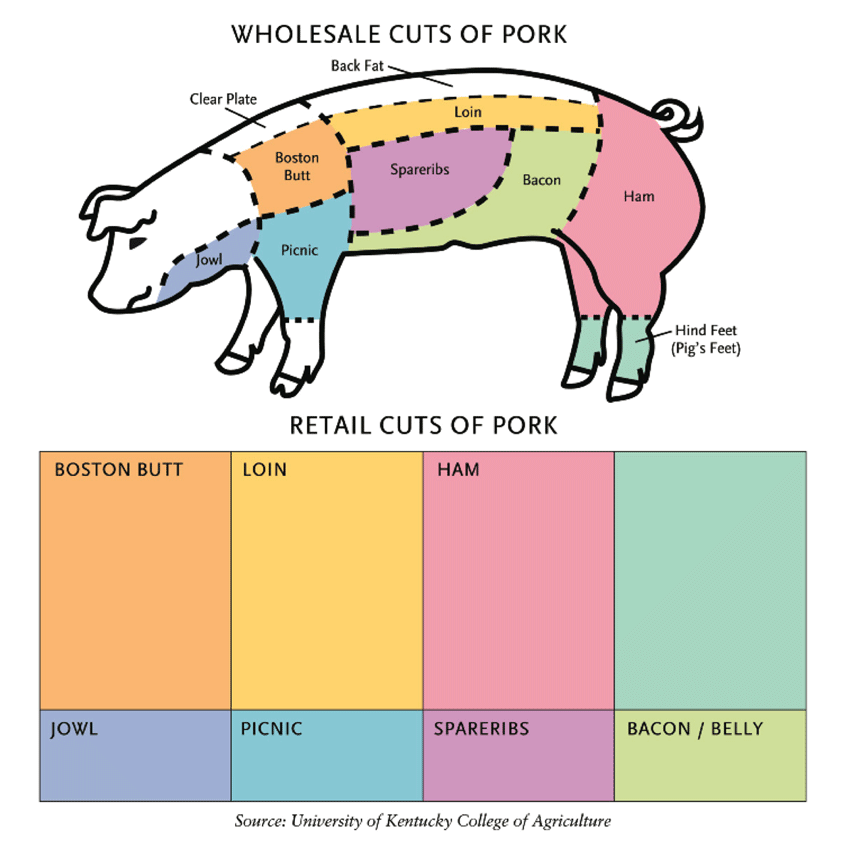
This online form follows the cutting instructions printable form. For your convenience, we have placed this online, step by step form here along with a chart and info to help you. If you have questions, please call us at 1-616-891-8447, or text us at 1-855-327-5100. We are happy to assist you through this process.
Please see chart and info to help you make choices about options that will suit you best.
Close
250 lb. Pig - On the Hoof
Not all of the pig is edible pork. On average about 54% of a pig makes it from the pen to the pan. A 250 lb. hog will yield approximately 136 lbs of custom cuts.
Around 28% of a pig’s live weight is inedible product removed during the slaughter and dressing procedure bringing our 250 lb. live pig to 173 lbs. dressed. The internal organs, skin, blood, feet, and other inedible products account for most of this loss.
Once the carcass is sanitarily dressed it is hung on a rail and placed into a cooler where it is quickly chilled. After the carcass is thoroughly chilled it can be cut.
Another 20% of the weight is removed during processing bringing our 173 lb. carcass to 136 lbs. Bone dust, fat trimming, de-boning, grinding, and moisture loss account for this unpreventable waste.
Hams and bacon are typically cured and smoked after cutting. *Weights vary due to species, genetics, feed regimen and age.